If there is a universal truth to modern parenting, it is the ongoing, exhausting negotiation over screen time. We all want our kids to be entertained, to learn, and to give us a brief moment of peace on a long car journey, but handing over a tablet often comes with a side of parental guilt and the inevitable meltdown when the battery dies. Enter the screen-free audio movement.
Recently, we had the opportunity to overhaul our family’s entertainment strategy thanks to the new Yoto ecosystem. This included the Yoto Player 4th Gen for the house, a Yoto Mini 4th Gen for travel, two sets of wireless headphones, and a towering stack of cards.

We wrapped them up in the brilliantly named Adventure Jackets (rubber protective sleeves), Dancing Flamingo for the Player and Sunny Side Up for the Mini. After putting them through their paces with a six-year-old and an eight-year-old, the results have been surprising. Not only is this system a fantastic way to encourage reading and active listening, but it is also one of the most thoughtfully designed pieces of technology I have brought into my home this year.
Why Does It Exist?
To understand the Yoto, you have to understand the problem it solves. Modern devices are built for infinite scrolling. They are designed to distract. The Yoto system seems to exist to do the exact opposite: to focus attention. It is a dedicated audio player that uses physical smart cards to play audiobooks, music, podcasts, and educational activities. There is no camera, no microphone, and no glowing touchscreen demanding constant interaction. It puts the control back into the hands of the child, allowing them to choose their entertainment physically and independently.

For my kids, who are growing up in a digital-first world, handing them a physical card and a dedicated device felt oddly nostalgic, like a modernised version of dropping a cassette tape into a Walkman. The tactile nature of the cards makes the experience deliberate.

The Mechanics: Setup, Quirks, and the Wi-Fi Reality
Technology designed for children still has to be set up by adults, and the process here is mostly straightforward, with one notable quirk that we experienced. Out of the box, the system prompts you to connect to your home network via the companion smartphone app. During this initial setup, I did run into a persistent Wi-Fi connection issue where it was saying my wifi password was incorrect (even though I was 100% possitive I was entering the correct one). After some troubleshooting, I realised the players were struggling to communicate with my router’s WPA3 encryption. As soon as I dropped the router’s encryption down to WPA2, the connection was instant. It is a minor hurdle, but one worth keeping in mind if your modern home network is highly secured.

Once connected, the ecosystem is incredibly easy to use. The intuitive controls are designed for small hands and developing brains. It was genuinely impressive to watch my six and eight-year-olds pick up the devices with next to no instruction and instantly know what to do with them. They quickly figured out how to skip chapters, adjust the volume, and swap out cards.
The Green Button is A Force of Nature
If you are familiar with older Yoto models, the biggest change in the 4th Generation hardware is the introduction of the Green Button. It sounds simple, but it completely changes the way the device is used.

The Green Button allows for card-free access to favourite audio. Through the parent app, you can assign up to 20 titles to a daytime playlist and another 20 to a nighttime playlist. This process of dayparting is quite clever. During the day, the kids can tap the button to bring up energetic music or active stories. Once the sun goes down, that same button automatically shifts to sleep sounds, lullabies, or calm bedtime stories. Because the playlists are set per device, my two children can have entirely different selections tailored to their own tastes. It eliminates the frantic search for a specific card at bedtime and gives them a curated, safe library right on the device.
Audio Quality and The Bowie Test
A device focused entirely on audio lives and dies by its speaker quality. Yoto claims the 4th Gen models feature upgraded acoustic engineering, but marketing claims only go so far. To give it a proper test, I bypassed the standard children’s stories and went straight for the David Bowie card.

I wanted to test the speaker with a highly familiar, complex sound profile. I was genuinely surprised by the result. The sound is rich, clear, and packs a surprising amount of warmth. The larger Yoto Player delivers a room-filling sound that feels perfectly balanced, while the smaller Mini still manages to hold its own without sounding tinny or compressed. Don’t let the cute kid friendly exterior fool you, this is a speaker you can use at a small gathering, maybe not a full party, but certainly a gathering.
The Headphone Quirk
Since a massive part of the appeal of these devices is keeping kids quietly occupied on airplanes or trains, we also tested the Yoto wireless headphones. Upon plugging them in, the audio was barely audible. It was incredibly quiet, which seemed like a major flaw for a travel-focused setup.
However, a quick dive into the Yoto app revealed the solution. By default, Yoto enables a strict headphone noise limiter to protect young, developing ears. It is a highly responsible feature, and one I appreciate them including. But for a noisy environment like a flight, it simply isn’t loud enough. Once you toggle the limiter off in the app, the volume opens up entirely, and the headphones sound amazing. It is a great example of a company putting safety first, but allowing parents the final say in how the technology is used.
The Cards: From Wicked to Make Your Own
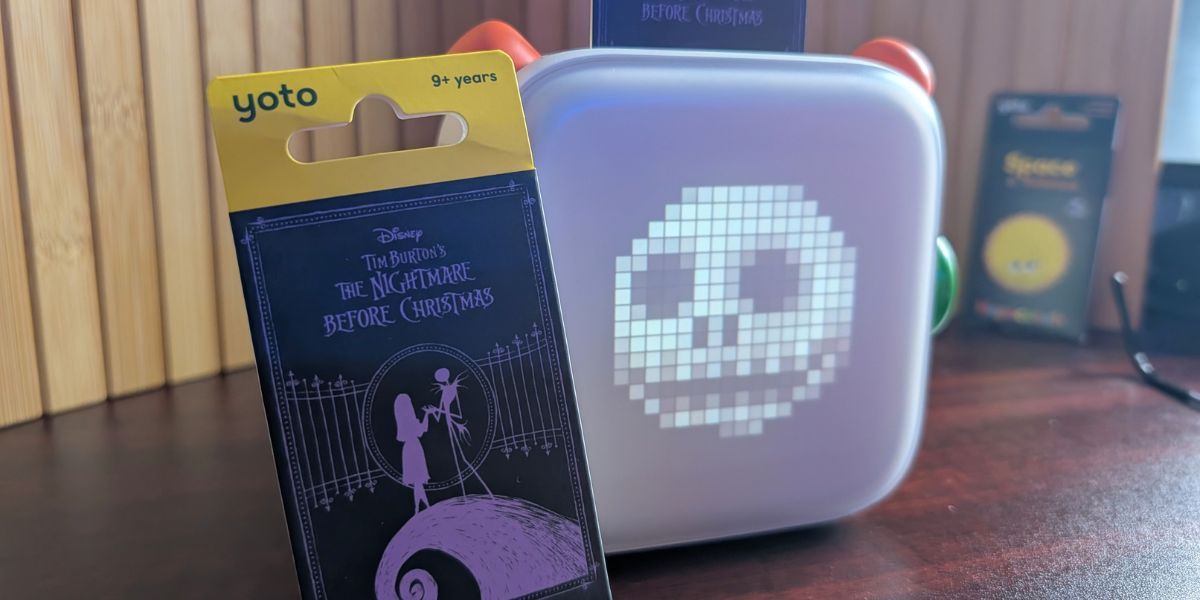
The content library is where the system truly shines. Our current stack includes a brilliant mix of entertainment and education: KPop: Demon Hunters, the Disney Animals Storybook Collection, Wicked: The Soundtrack, The Magic Faraway Tree Trilogy, Gruffalo Granny, 5-Minute Halloween Stories, Disney: Tim Burton’s The Nightmare Before Christmas, and a dedicated Space & Science pack.

The variety is excellent, catering to everything from musical theatre phases to deep dives into the solar system. We loved the educational benifits of the space card in particular which featured some space songs we normally look up on Youtube, so it’s actually nice to think they can now access this on a device you don’t need to supervise.
It’s the perfect time of year for the Halloween collection and The Nightmare before Christmas, each night we’ve picked a themed story in anticipation for the big event on October 31. The girls have even dragged out the “Sally Finelstein” costume as a result.
Beyond the purchased cards, the system includes a daily podcast called Yoto Daily. I expected it to be background noise, but it is a surprisingly entertaining, engaging daily programme that the kids actively look forward to.
Perhaps the most powerful feature, however, is the “Make Your Own” cards. You can link your own MP3s, personal recordings, or even specific radio streams to blank cards using the app. It allows the ecosystem to grow with your child, ensuring they aren’t locked into a closed storefront.
Player vs. Mini: The Comparison
If you are wondering which model to choose, the new 4th Gen lineup makes the distinction very clear.
The Yoto Player 4th Gen is chubby, rounded, and features a brilliant full-panel night light with seven colours. It feels designed for a bedside table, acting as a sleep trainer, alarm clock, and premium speaker all in one. It has a battery life of up to 14 hours and 64GB of internal storage, which equates to over 1,000 hours of offline audio.
The Yoto Mini 4th Gen, on the other hand, is built for the wild. It shares the same impressive 64GB of storage and updated Wi-Fi 6 and Bluetooth 6.1 internals, but it drops the night light in favour of ultimate portability. Most importantly, the new Mini is rated IP67 water and dust resistant, meaning it can survive being dropped in a puddle or buried in the sand. It is the definitive choice for the car, the beach, or the school bag.
I’d like to say I have a favourite but they both have really solid and unique qualities, so look at what you need and go for that one.
While there are other screen-free audio players on the market, such as the Toniebox, the Yoto feels significantly more mature. It doesn’t rely on bulky plastic figurines; the credit-card-sized media is easier to store, cheaper to produce, and appeals to a much wider age range.
Final Verdict
The Yoto 4th Gen ecosystem is a rare piece of technology that actively improves the daily rhythm of family life. Yes, you may need to tweak your router settings (you also may not, I have a very new model router), and you will definitely want to adjust the headphone limiter before your first long trip, but those are minor bumps on an otherwise flawless road.
By giving children a tactile, independent way to engage with stories, music, and learning, Yoto has created something genuinely special. It empowers kids to make their own choices while giving parents the peace of mind that comes from a closed, ad-free, screen-free environment.
Highly recommended.
Find out where to get a Yoto Player in Australia here