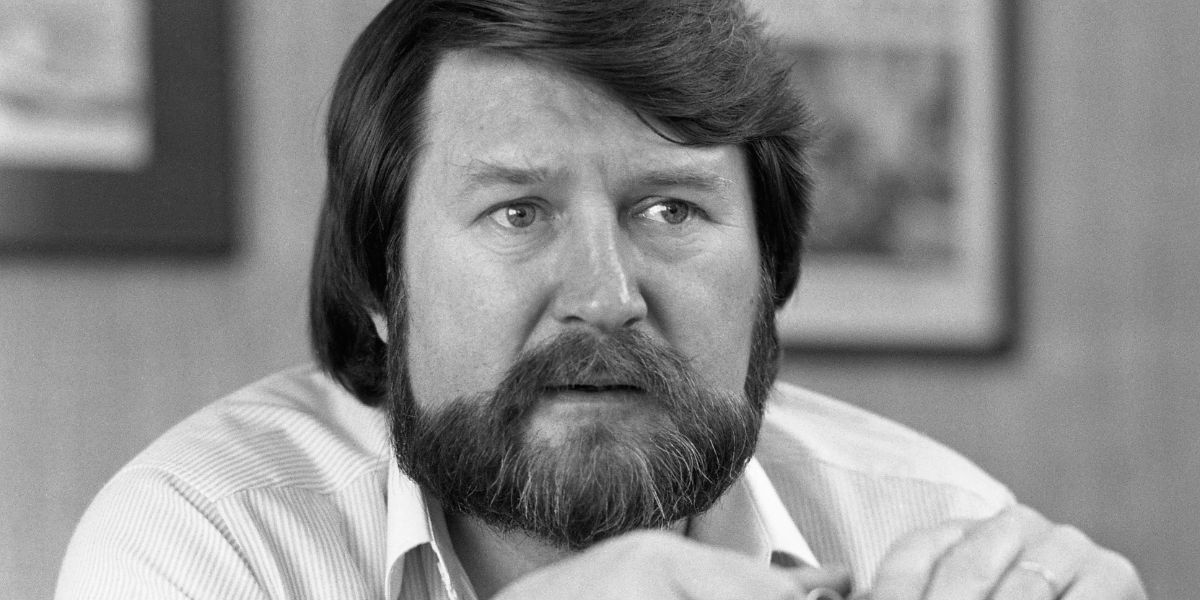
The man universally known as the “Human Headline” has sadly signed off.
Veteran Australian broadcaster Derryn Hinch has died at the age of 82. He reportedly passed away earlier this week following a battle with cancer, a diagnosis he received shortly after celebrating his 80th birthday.
While the news of his death is sombre, reviewing Hinch’s career is anything but. It is a sprawling, chaotic, and utterly fascinating case study of a media personality who refused to stay in his lane.
A Career Built on Controversy
In an era where public figures are heavily managed by public relations teams and polished to a sterile shine, Hinch was the jagged edge. He didn’t just report the news; he routinely made himself the centre of it.
Entertainment reporter Peter Ford was one of the first to confirm the news on social media, perfectly encapsulating the broadcaster’s towering legacy.
“Very saddened to report Derryn Hinch has died,” Ford shared on X. “What a life and career! Fearless & provocative. He achieved all he wanted to do in life. RIP.”
Very saddened to report Derryn Hinch has died. What a life and career! Fearless & provocative. He achieved all he wanted to do in life. RIP
— Peter Ford (@newmrpford) July 10, 2026
“Fearless and provocative” might actually be an understatement. Hinch built his brand on a relentless, combative style of journalism. He was a champion for the causes he believed in, most notably child protection, and he pursued those causes with a singular, sometimes reckless, determination.
He didn’t just talk about the flaws in the justice system; he actively defied court orders to name and shame individuals he believed the public needed to know about. This refusal to back down saw him fined, fired, and even imprisoned. For most media professionals, a jail sentence is a career-ender. For Hinch, it was just another chapter for the memoir.
The Ultimate Shape-Shifter
What makes Hinch’s story so remarkable to look back on is his sheer adaptability. Media landscapes evolved, audiences changed, but Hinch always found a microphone.
He conquered print journalism, dominated talkback radio, and became a fixture of evening television. When traditional media could no longer contain him, he simply pivoted to politics, successfully running for the Senate and founding his own political party, Derryn Hinch’s Justice Party.
He was a man who understood the fundamental rule of broadcasting: you do not have to be liked, but you cannot be ignored. And he made absolutely sure we could never ignore him.
The Final Sign-Off
Whether you agreed with his politics, approved of his methods, or found his broadcasting style infuriating, it is impossible to deny his impact. Hinch was a towering figure in a highly competitive industry, maintaining relevance through sheer force of will.
He fought public health battles with the same transparency he applied to his journalism, openly discussing his liver transplant in 2011 and, more recently, his cancer diagnosis. He approached mortality with the same blunt, matter-of-fact tone he used for his editorials.
The media industry is significantly quieter today. We have lost a trailblazer, an agitator, and a uniquely complex personality. Derryn Hinch leaves behind a legacy that will be debated in journalism classes for decades to come, and honestly, he probably wouldn’t want it any other way.
As the man himself would say: That’s life.